

Billings hosts the Backcountry Film Festival
On a recent visit to the Mountain West, I found myself waylaid by seasonally unprecedented snowfall around my home just south of the Smoky Mountains, leaving me stranded in Billings, Montana. On a lazy Sunday, without any of my gear, I had a yearning for a taste of the Mountain West adventure, which brought me to the Arthouse Theater, host of the Winter Wildlands Alliance’s Backcountry Film Festival. While the snowpack in Appalachia may be better than what you can find out West this winter, the Film Festival provided some much-needed winter stoke. Made up of ten films, all with unique winter perspectives, four stood out as my personal favorites and were well worth the $15 price of admission.
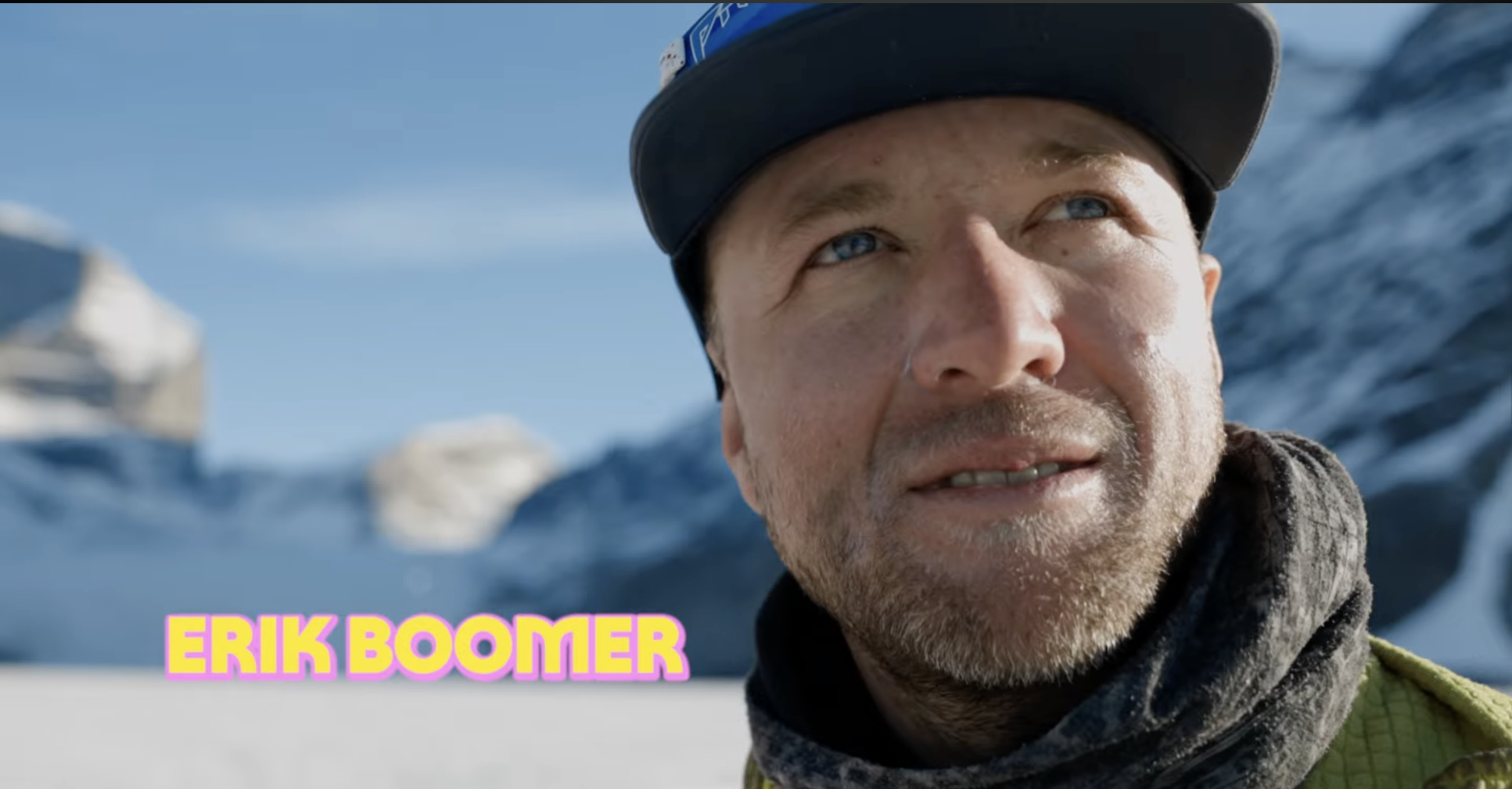
With a clear backcountry skiing through line, the film festival was highly diverse with offerings that spotlighted underrepresented groups in the outdoors. One of the best films of the collection came in the first act of the tour with A Baffin Vacation, Love on Ice. As the longest and easily most epic addition, A Baffin Vacation follows whitewater expedition legend Erik Boomer and his partner, Sarah McNair-Landry, on a three-month-long adventure on a remote Canadian island. Sarah and Boomer’s trip perfectly sums up the joys and struggles of life on the land, as the two push through 48-hour travel days relying on a heavy dose of positive self-talk. The duo also portrays a versatility that can be lost in many adventure films, focusing on a professional in one sport rather than a “professional amateur.” While Boomer is a world-class whitewater kayaker and Sarah has a lifetime of arctic traveling experience, neither is a pro at one thing; instead, showing the value of pushing boundaries and living on the learning curve. This is seen as they traverse Baffin Island by kayak, skiing along with trad and ice climbing.
Following the first film, I was set that the festival was all downhill from here, primarily due to my bias given to anything produced by Rush Sturgis that spotlights some whitewater floaty boaty. Surprisingly, this was not the case as the cinematic style and creativity continued to one-up itself. Nowhere was this more paramount than in Polar. As a narrative, Polar lacks some of the nuance of its predecessor following professional skier Robert Pallin Aarin's attempt to juggle being a father while still trying to find low-gravity days while backcountry skiing. This said, the film made me, both as a filmmaker and a skier, come away wondering how Aarin’s and Rasmus Bjerkan pulled off some shots. A good portion of Polar takes place at night in near total darkness, as Robert skies after his kids go to sleep, making it a technical masterpiece that left my jaw on the floor.
After a brief intermission and a top-up of my Athletic Brewing IPA, I was pleasantly surprised to find the second and final stanza of the Backcountry Film Festival to have arguably the best narrative of the afternoon. While Adaptive Avalanche watched more like a piece of owned media produced by a non-profit than a director's personal project, it did so in a nearly perfect way. The film left me surprised that fewer brands sponsored the film, a major miss on the part of Burton and Black Diamond. With a short run time of just eight minutes, Adaptive Avalanche left me ready to go out and hit the slopes more than any other film in the lineup. The project followed a group of physically disabled athletes as they completed an Avi 1 course, which was made up entirely of adaptive athletes. As an instructor and vocal safety advocate in the whitewater paddling world, this film had a dual effect. Adaptive Avalanche not only blew up barriers to backcountry adventure, but it also showed the value and accessibility of safety training for all. As I look to spend more time in the mountains, the film showed me that, regardless of skill level or physical ability, preparing for the backcountry can be done by all.
I came away from the festival stoked to explore more of my own mountains and excited to return to my roots of winter adventure forged in Duluth, Minnesota. For backcountry lovers and armchair enthusiasts, the festival offers a way to interact with the outdoor community while making a difference, with all proceeds going to non-profit partners of Winter Wildlands Alliance.
